



Sang-Mi PARK (Yokohama National University)
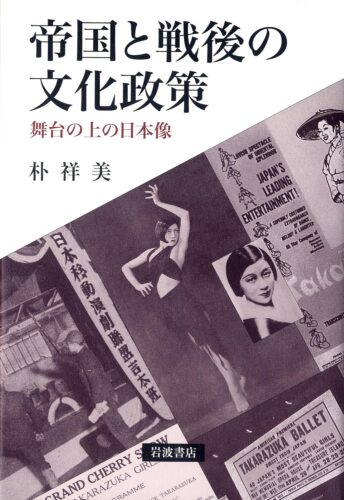
In the lecture entitled “The Power of Culture in the Japanese Empire and Cold War Asia,” Dr. Sang Mi Park will present her research on the colonial Korean dancer Ch’oe Sŭng-hŭi (1911–1969?). Internationally recognized by her Japanese name, Sai Shōki, Ch’oe learned modern dance in the 1920s under the renowned Japanese teacher Ishii Baku. In the 1930s, however, she switched the styles, incorporating moves from traditional Korean dance and giving her performance an Asian flavor. Occurring during the colonial cultural boom, this shift heightened her reputation around the world, allowing her to perform in Japan, the Korean peninsula, Taiwan, China, several European countries, the United States, and Latin America. After the Second World War Ch’oe left for North Korea and took the leadership role in dance and cultural policy under the Kim Il-Sung regime.
Despite achieving international fame as an Asian dancer, the life and career of Ch’oe Sŭng-hŭi are not fully revealed. Furthermore, one also witnesses that there are significant problems with the academic discourse about this dancer, ranging from misinformation to plagiarism. After tracing Ch’oe’s records from the 1920s to the 1960s, Dr. Park explores the cultural and political nature of Ch’oe’s dance performances presented to the audience in different eras and places. Dr. Park also reports on some of the discoveries she has made since organizing the collaborative research project with the sponsorship of the International Research Center for Japanese Studies (Nichibunken) in Kyoto, Japan. By doing so, this lecture will provide students and colleagues with a methodology for Ch’oe Sŭng-hŭi studies that will also be valuable in broadening the scope of knowledge on the cultural encounters in the Japanese Empire and Cold War Asia.
This lecture is offered as part of the undergraduate course Arts of Korea.
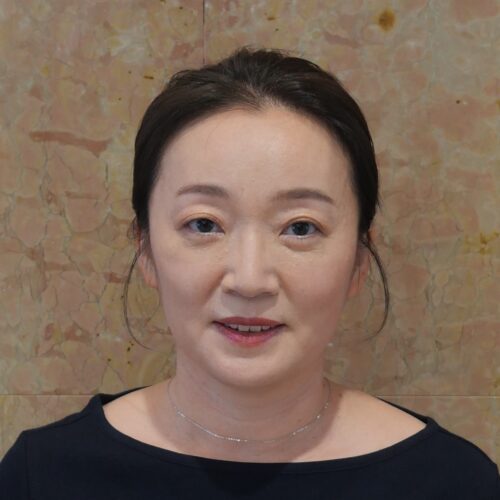
Sang-Mi PARK is a Professor at Yokohama National University in Japan. She received academic training in the history of East Asia and earned a Ph.D. from Princeton University in June 2007. After offering courses on Japanese history from the medieval through the modern periods at the Massachusetts Institute of Technology, and in various departments and graduate schools at Waseda University and the University of Tokyo in Japan, she joined the YNU faculty in October 2014 . Her most recent publications include Teikoku to sengo no bunka seisaku: butai no ue no Nihon-zō [The Cultural Policy of Imperial and Postwar Japan: The Image of a Nation on Stage] (Tokyo: Iwanami Shoten, 2017); “Staging Japan: The Takarazuka Revue and Cultural Nationalism in the 1950s–60s,” Asian Studies Review 39: 3 (September 2015), 357–374; and “Ri Kōran by Asari Keita,” Theatre Journal 66: 2 (May 2014): 274-276 (performance review). Her research interests focus on Showa Japan’s cultural diplomacy and performance policies within a global context.
Monday, September 29th, 2025, from 1:30 p.m. to 3:30 p.m.
Salle 234C, – Halles aux Farines, esplanade Pierre Vidal-Naquet Paris 13e
Organized by the Université Paris Cité, the LCAO and the CRCAO and in collaboration with the International Research Center for Japanese Studies (Nichibunken)
Partager